
Back to News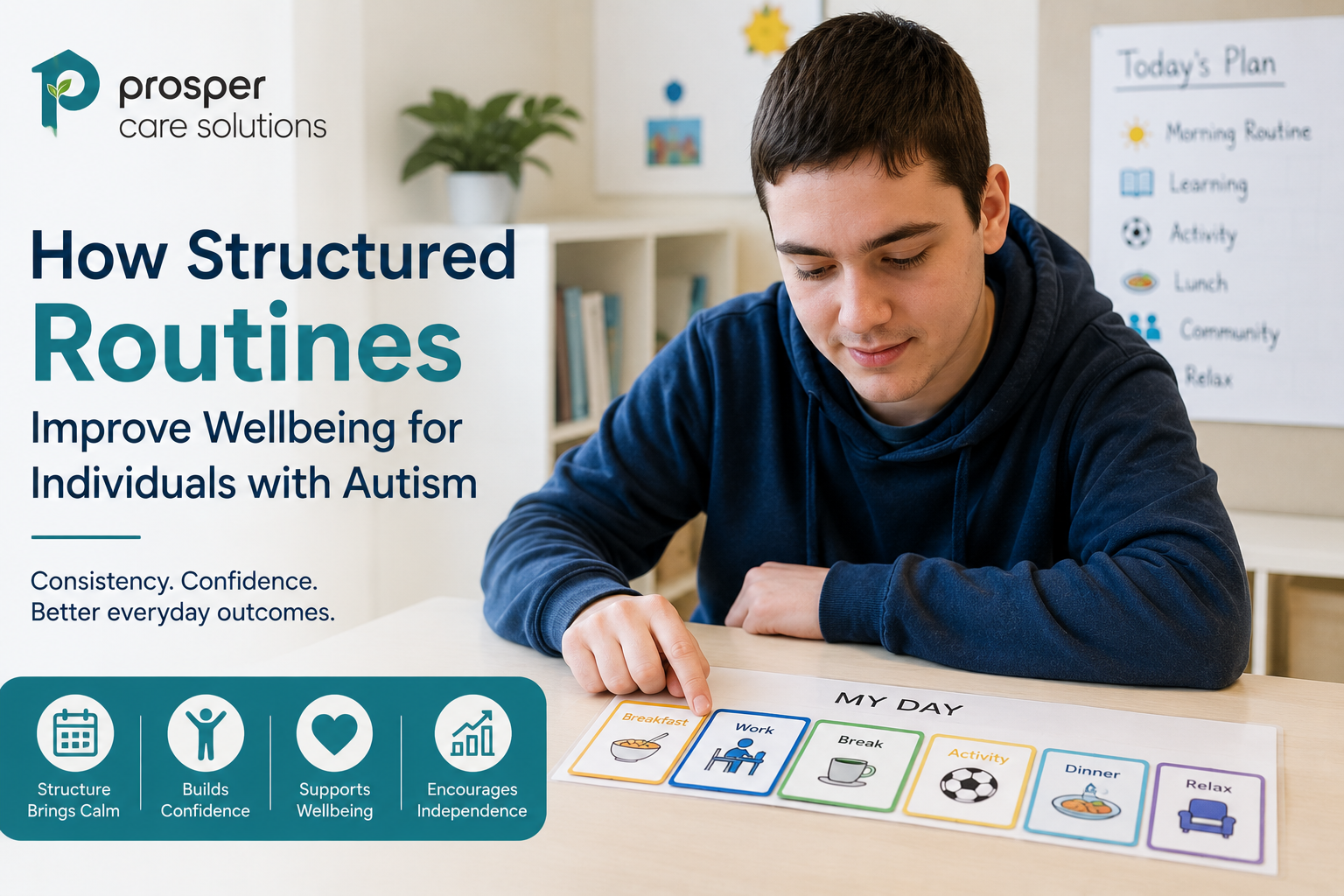
Care Home Activities
How Structured Routines Improve Wellbeing for Individuals with Autism
5 June 20264 min readCare Home Activities
Structured routines provide stability, predictability, and confidence for individuals with autism. Discover how person-centred routines can reduce anxiety, promote independence, and improve overall wellbeing, and learn how Prosper Care Solutions supports individuals to thrive through consistent and meaningful daily structure.
Introduction
For many individuals with autism, the world can often feel unpredictable and overwhelming. Changes in environments, unexpected events, and uncertainty can create anxiety and impact emotional wellbeing. This is why structured routines play such an important role in supporting autistic individuals to feel safe, confident, and in control of their daily lives.
At Prosper Care Solutions, we recognise that every individual is unique. By providing person-centred support and consistent routines tailored to individual needs, we help create environments where people can thrive, develop independence, and achieve meaningful outcomes.
Understanding the Importance of Routine
A routine is more than simply following a schedule. It provides structure, predictability, and a sense of security that can help individuals navigate daily life with greater confidence.
For many autistic individuals, routines can:
Reduce anxiety and uncertainty
Improve emotional regulation
Increase confidence in daily activities
Support communication and understanding
Encourage independence
Promote positive mental wellbeing
When individuals know what to expect, they can focus more on participating in activities and achieving personal goals rather than worrying about unexpected changes.
Reducing Anxiety Through Predictability
One of the most significant benefits of structured routines is the reduction of anxiety.
Many autistic individuals find comfort in knowing:
What will happen during the day
Who will be supporting them
Where they need to be
When activities will take place
Predictable routines create a sense of stability and help individuals feel more secure within their environment.
When uncertainty is reduced, individuals often experience greater emotional wellbeing and improved engagement in daily activities.
Supporting Independence and Life Skills
Structured routines can be a powerful tool for developing independence.
By following consistent daily schedules, individuals can gradually learn and master important life skills such as:
Personal care
Meal preparation
Household tasks
Medication management
Community access
Budgeting and shopping
As confidence grows, individuals may require less prompting and support, allowing them to take greater control over their daily lives.
At Prosper Care Solutions, we encourage individuals to actively participate in their routines, helping them build confidence and achieve greater independence over time.
Improving Communication and Understanding
Clear routines can also improve communication and understanding.
Many autistic individuals benefit from:
Visual schedules
Picture timetables
Activity planners
Communication boards
Written reminders
These tools help individuals understand expectations and prepare for upcoming activities.
Providing information in a consistent and accessible way can reduce confusion and promote successful participation throughout the day.
Supporting Emotional Wellbeing
Emotional wellbeing is closely linked to feeling safe, understood, and in control.
Structured routines help individuals:
Manage stress more effectively
Develop coping strategies
Build resilience
Feel more confident in unfamiliar situations
Experience greater emotional stability
When routines are personalised and designed around individual preferences, they can create opportunities for enjoyment, achievement, and personal growth.
Balancing Structure and Flexibility
While routines are important, it is equally important to develop flexibility over time.
Life naturally includes changes, and helping individuals adapt gradually can improve confidence and resilience.
At Prosper Care Solutions, we work closely with individuals to:
Introduce changes gradually
Prepare for new experiences
Provide reassurance and support
Develop coping strategies
Celebrate successful transitions
This balanced approach helps individuals maintain the security of routine while building skills to manage change when necessary.
The Role of Person-Centred Care
No two individuals with autism are the same, which means no two routines should be identical.
A person-centred approach considers:
Individual preferences
Sensory needs
Communication styles
Personal goals
Daily interests
Support requirements
By tailoring routines to the individual, we create meaningful experiences that enhance wellbeing and promote positive outcomes.
How Prosper Care Solutions Uses Structured Routines
At Prosper Care Solutions, structured routines form an important part of our person-centred approach to care and support.
Our teams work closely with individuals, families, local authorities, and healthcare professionals to develop routines that:
Promote independence
Encourage community participation
Reduce anxiety
Support emotional wellbeing
Build confidence and life skills
Create opportunities for meaningful engagement
We understand that the right balance of structure, consistency, and flexibility can make a significant difference in an individual's quality of life.
Conclusion
Structured routines are a valuable tool in supporting the wellbeing of individuals with autism. By providing predictability, reducing anxiety, promoting independence, and supporting emotional wellbeing, routines help individuals feel more confident and in control of their lives.
At Prosper Care Solutions, we are committed to creating supportive, person-centred environments where individuals can flourish, develop new skills, and achieve their full potential.
Together, through understanding, consistency, and compassionate support, we can empower individuals with autism to live meaningful and fulfilling lives.